
Repricing has stopped being an exception in the AI market and started behaving like a scheduled product update. This guide separates the five forms a price change takes, examines four events from 2025 and 2026 that reshaped how buyers think about subscriptions, and sets out a six factor scoring model for the only question that matters afterwards: stay, hedge, or leave.
The Announcement Email Is Now a Recurring Calendar Item
Software pricing used to move slowly. A vendor raised prices once every few years, gave notice, and absorbed a small wave of complaints. Generative AI broke that rhythm within thirty months. Between March 2023 and June 2026, the tools most people rely on daily passed through three distinct pricing models, and several of them changed terms twice inside a single year.
The reason is structural rather than opportunistic. Traditional software carries a marginal cost close to zero, so a heavy user and a light user cost roughly the same to serve. Inference does not work that way. Every prompt, every agent run, and every long context window consumes compute that the vendor pays for at the moment of use. When a flat subscription meets a cost line that scales with consumption, one of the two has to give. Gartner projects global AI spending will rise 44 percent year on year in 2026, which suggests the pressure is not easing.
For subscribers, the practical consequence is simple. Pricing is now a variable to monitor, not a fixed input to plan around. The tools that feel indispensable today are the same tools most exposed to the next change, because heavy dependence and heavy inference cost are the same thing viewed from two sides.
Five Ways a Price Change Arrives, and Only One Looks Like a Price Change
Most coverage of AI repricing focuses on the number on the pricing page. That number is often the least important part of the announcement. Repricing events in the current market fall into five recognisable patterns, and four of them can leave the advertised price untouched.
The sticker increase. The advertised monthly figure goes up. Notion moved Plus from 10 dollars to 12 dollars and Business from 15 dollars to 18 dollars in 2026. Canva Pro went from 12.99 dollars to 15 dollars, its first rise since 2021. Adobe removed a promotional discount and lifted Creative Cloud to 69.99 dollars per user in the third quarter of 2025.
The unit swap. The price holds while the thing being bought is redefined. On 16 June 2025, Cursor replaced 500 fast requests on its 20 dollar Pro plan with 20 dollars of model usage billed at underlying interface rates. Same price, different unit, and a very different experience for anyone using expensive frontier models.
The metering switch. A flat allowance becomes a consumption meter. GitHub Copilot moved every plan to usage based billing on 1 June 2026, replacing premium request units with credits priced against token consumption, including input, output, and cached tokens. Copilot Pro stayed at 10 dollars, Pro Plus at 39 dollars, Business at 19 dollars per user, and Enterprise at 39 dollars per user.
The forced bundle. An optional add on becomes mandatory. Notion discontinued its separate AI add on and folded the capability into paid plans, which spreads inference cost across every subscriber, including those who never use the feature. Canva tied its increases directly to the Magic Studio feature set.
The quiet downgrade. Nothing on the pricing page moves, but the value behind it shrinks. Model multipliers rise, older models are retired, fallback options disappear, and lower tiers gain advertising. Ads reached ChatGPT Free and Go tiers in the United States in February 2026 and extended to 31 European markets that August.
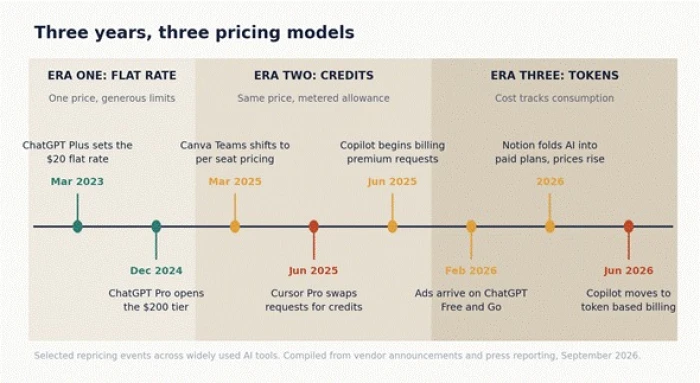
Figure 1. Three pricing models in three years, mapped across widely used AI tools.
Why the Sticker Price Stopped Being the Signal
Ranking recent repricing events by advertised increase produces a misleading picture. The largest headline jump belongs to Canva, whose flat Teams plan for five users, priced around 120 dollars a year, was replaced by per seat Business billing at 20 dollars per user each month. For a small team that arithmetic works out near a 300 percent increase, and the reaction was loud enough to force a partial reversal.
Yet the two changes that generated the most sustained backlash carried no advertised increase at all. Cursor and GitHub Copilot both kept their headline numbers intact and rebuilt the billing structure underneath. Subscribers who compared pricing pages before and after saw nothing wrong. Subscribers who compared invoices saw something very different.
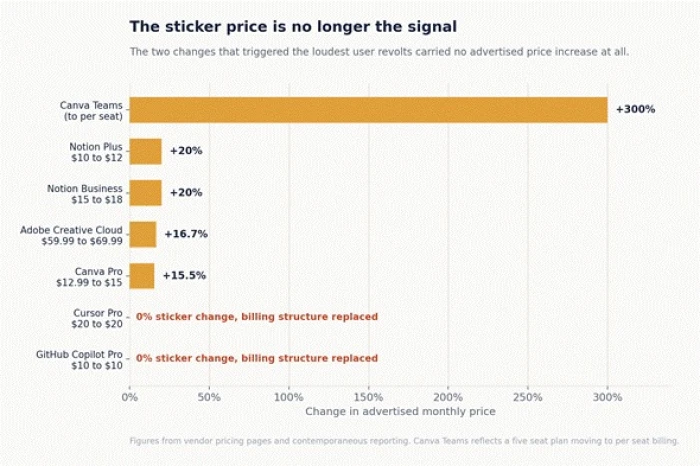
Figure 2. Advertised price change by repricing event. The two most disruptive changes register as zero.
A pricing page comparison is no longer a sufficient audit. The unit of billing matters more than the number attached to it.
Four Case Files Worth Studying Before the Next Announcement
Cursor, June 2025: the unit swap that redefined a plan
Cursor replaced the request based structure of its 20 dollar Pro plan with a credit pool tied to model inference costs, while introducing a 200 dollar Ultra tier above it. Community analysis suggested the effective allowance fell from 500 requests to roughly 225 at the same price, and some subscribers reported unexpected overage charges because no spending limit had been set. Anysphere, the company behind Cursor, published an apology in early July acknowledging that the rollout had been poorly communicated, committed to refunds for surprise charges incurred between 16 June and 4 July, and clarified that what had been described as rate limits was in fact a usage credit pool.
The lesson sits in the language. A term borrowed from performance management, rate limits, described what was actually a billing ceiling. Ambiguity in the announcement produced the invoice shock, not the underlying economics.
GitHub Copilot, June 2026: metering at scale
Copilot moved roughly 4.7 million paid subscribers to token based billing on 1 June 2026. Base subscription prices did not change, but chat, agent mode, code review, and command line use began consuming credits priced at one cent each against published model rates. The fallback that previously let users continue on a cheaper model after exhausting their allowance was removed. Automated pull request reviews began drawing on both credits and continuous integration minutes, creating two billing tracks for a single action.
Developer reaction was severe. The official community discussion thread accumulated hundreds of comments and an overwhelmingly negative vote ratio, with individual users projecting cost increases between ten and fifty times for agent heavy workflows. Those projections came from users rather than from GitHub, and some developers argued that the highest figures reflected inefficient prompting rather than typical usage. GitHub offered a refund window for annual Pro and Pro Plus cancellations until 20 May 2026, which functioned as an exit door for anyone who did the arithmetic early.
Canva, 2025 into 2026: per seat conversion and shared credit pools
Canva converted its flat Teams plan into per seat Business billing and raised the individual Pro tier, attributing both to the Magic Studio feature set. A 40 percent first year discount softened the immediate impact without changing the destination. After sustained criticism, Canva restored legacy rates for long standing customers and published a pricing commitment promising at least 60 days of notice before future changes.
The mechanic worth noting is the credit pool. Magic Studio allowances are shared across every AI feature on the platform, and credits are consumed by generation attempts including unsuccessful ones. An AI Pass add on lifts the ceiling at 100 dollars per person each month without unlocking additional tools. Independent pricing trackers disagreed on Canva's headline figures through mid 2026, which is itself a signal about how quickly this category moves.
Notion, 2026: the bundle that shifted who pays
Notion raised Plus and Business pricing and discontinued its separate AI add on, folding the capability into paid plans. The rationale was defensible and openly stated: inference for heavy AI users had outrun what an eight dollar add on could cover. Bundling spreads that cost across the whole base.
The redistribution is the point. Subscribers who use AI features constantly received better value. Subscribers who ignored them entirely began paying more for capability they never requested. Both groups saw the same announcement and experienced opposite outcomes, which is precisely why a generic reaction to a repricing event tends to be the wrong one.
The Bill Shock Curve
Metered billing does not automatically cost more. For light users it frequently costs less, and several vendors have priced included allowances to match the previous flat rate exactly. What disappears is predictability, and predictability is what most subscribers were actually buying.
Under a flat plan, the worst case and the expected case are the same number. Under a metered plan they diverge sharply as intensity rises, and the divergence is driven by the workflows that produce the most value: long context sessions, autonomous agent runs, and repository wide operations that can trigger dozens of model calls from a single instruction.
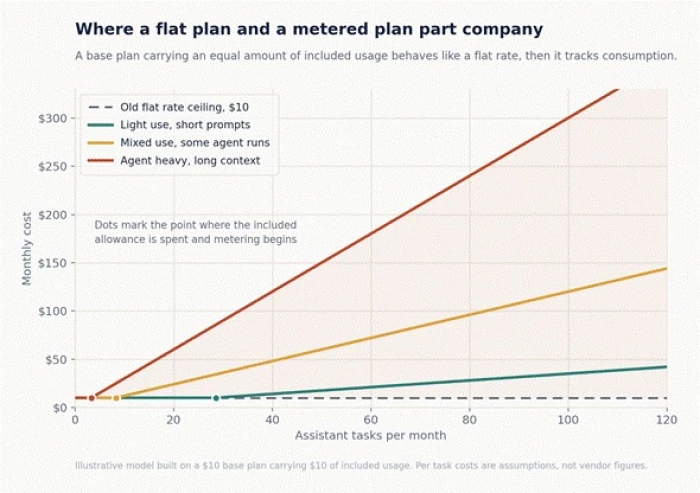
Figure 3. Modelled comparison of a flat ceiling against metered billing across three usage profiles.
Three practical consequences follow. Budgets become forecasts rather than line items. Spending caps become mandatory rather than optional. And the cost of experimentation rises, because trying something ambitious now carries a visible price at the moment of trying it.
Four Costs That Never Appear on the Invoice
Forecast loss. A team that could previously state next quarter's tooling spend to the rupee or dollar now presents a range. Finance functions dislike ranges, and procurement conversations lengthen accordingly.
Rework risk. Repricing frequently arrives alongside model retirements and multiplier changes. Prompts, automations, and internal documentation tuned to a specific model need revisiting when that model becomes expensive or disappears.
Attention tax. Usage dashboards, spending alerts, and monthly credit reconciliation are new administrative work that did not exist under flat pricing, and it lands on the same people doing the actual work.
Trust decay. The most durable cost. Once a vendor has restructured billing without clear notice, every subsequent release note gets read defensively, and the tool stops being something the team can quietly rely on.
The SWITCH Score: A Six Factor Test for Staying or Leaving
Reacting to a repricing announcement on the day it lands produces two predictable errors. The first is inertia, absorbing an increase that no longer reflects the value received. The second is a reflexive cancellation that trades a known cost for an unknown migration. The SWITCH Score exists to delay both reactions by about a week and replace them with arithmetic.
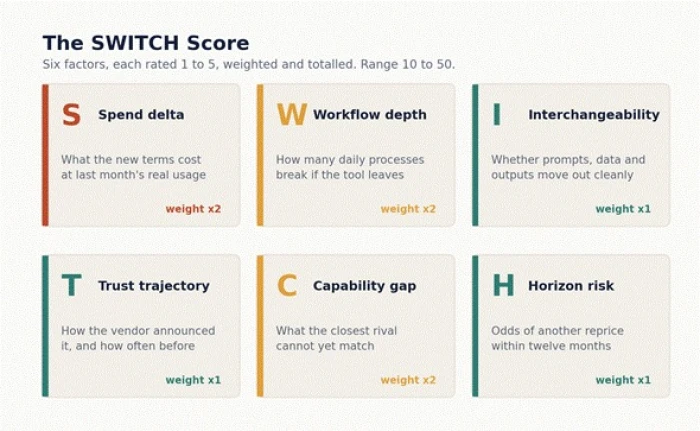
Figure 4. The six factors, with weightings applied to spend, workflow dependence, and capability.
Each factor is rated from 1 to 5, where 5 always represents the strongest case for leaving. Three factors carry double weight because they dominate the outcome in practice. Totals run from 10 to 50.
| Factor | Weight | What a score of 5 looks like |
| Spend delta | x2 | Last month's actual usage, repriced under the new terms, costs substantially more. |
| Workflow depth | x2 | Few recurring processes break if the tool is removed tomorrow. |
| Interchangeability | x1 | Prompts, source files, and outputs export cleanly and open elsewhere. |
| Trust trajectory | x1 | The change was poorly communicated, and it is not the first one. |
| Capability gap | x2 | At least two rivals match the output quality that matters for the work. |
| Horizon risk | x1 | Another structural change looks likely within twelve months. |
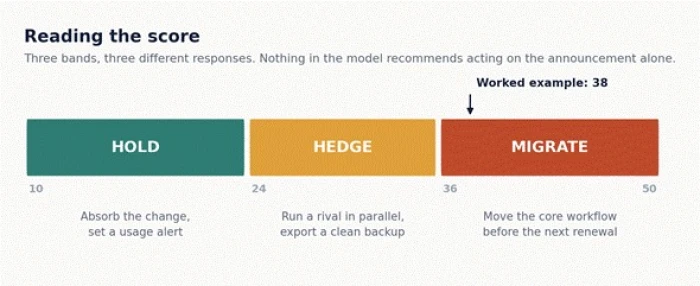
Figure 5. Score bands and the response each one indicates.
A worked example
Consider a four person design studio whose collaboration plan converts to per seat billing. Spend delta scores 5 because the monthly bill roughly triples at the same headcount, contributing 10. Workflow depth scores 4, since only two recurring deliverables depend on the platform, contributing 8. Capability gap scores 4 because rival editors cover the same output formats, contributing another 8. Interchangeability scores 4 as finished assets export cleanly, trust trajectory scores 4 given a second change inside eighteen months, and horizon risk scores 4. The total reaches 38, which places the studio in the migrate band with roughly a renewal cycle to act.
The same exercise run by a studio with deep template libraries, brand kits, and client handover workflows built into the platform would score workflow depth at 2 and interchangeability at 2, landing near 28 and pointing to a hedge instead. Identical announcement, opposite conclusion, and that is the intended behaviour of the model.
Switching Is Already the Default Behaviour
Vendors set prices with a clear view of how subscribers behave, and the behavioural data explains a great deal about the current market. A Bango survey of 2,000 AI subscribers in the United States found the average respondent paying for four premium AI tools at a combined 66 dollars per month, with 53 percent cancelling and restarting subscriptions as their standard way of managing cost. Sixty one percent said they would cancel every streaming service before giving up an AI tool.
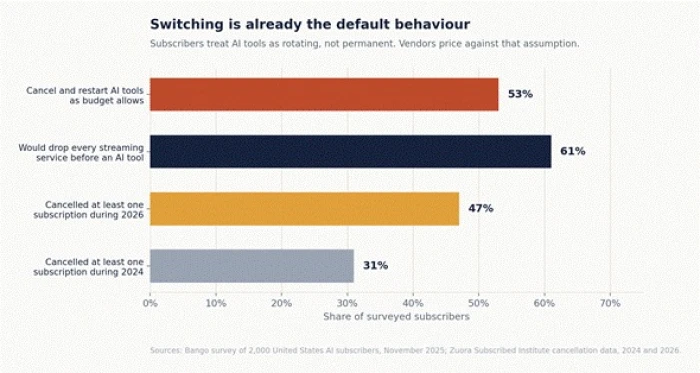
Figure 6. Cancellation and rotation behaviour among AI subscribers.
Broader subscription data points the same direction. Zuora recorded 47 percent of consumers actively cancelling at least one subscription during 2026, up from 31 percent in 2024. RevenueCat found that AI applications generate roughly 41 percent more revenue per user than non AI applications while churning about 36 percent faster over twelve months. Rotation is not a fringe response. It is the modal one.
That has a useful implication for anyone negotiating rather than simply subscribing. Procurement analysis suggests that bringing a written, verified quote from a competing vendor into a renewal conversation moves the final price by several percentage points. The shortlist is not only an exit route. It is the only leverage a subscriber has.
The Alternatives Shortlist, by Category
A shortlist is worth building before it is needed, because the worst moment to evaluate alternatives is the week an invoice triples. The table below groups the categories where repricing has been most active, with candidates that merit a parallel test and the specific question to answer during that test.
| Category | Typical repricing pattern | Alternatives worth a parallel test | Question to answer first |
| Coding assistants | Unit swap, then metering | Cursor, Claude Code, OpenAI Codex, Windsurf, Aider, Continue.dev paired with local models through Ollama | Does the included allowance survive one normal week of agent runs |
| Chat assistants | Tier sprawl and ad supported lower tiers | ChatGPT, Claude, Gemini, Perplexity, DeepSeek, open weight models through a routing layer | Which model class the plan actually unlocks, not which brand |
| Design and creative | Per seat conversion, shared credit pools | Adobe Express, Figma, Photopea, Affinity, Piktochart | Are credits consumed by failed generations as well as successful ones |
| Docs and workspace | AI folded into higher paid tiers | Obsidian, Coda, Confluence, Google Workspace | Do databases and linked pages survive the export intact |
| Research tools | Metered deep research runs | NotebookLM, Perplexity, Elicit, Consensus, STORM, Research Rabbit | Can citations be exported in a usable format |
| Image generation | Credit pools and quality tiers | Midjourney, Leonardo, Ideogram, Flux based services | What commercial usage rights attach at the tier being considered |
Several strong options in this space cost nothing. NotebookLM, Research Rabbit, and STORM are free, and Photopea covers deep image editing in a browser tab. Open weight models running locally through Ollama or a similar runtime remove the metering question entirely for teams willing to trade some capability for a fixed hardware cost.
The Seven Day Switch Test
A repricing announcement usually comes with several weeks of notice. That window is enough for a structured evaluation, provided the work happens in the right order.
1. Pull the last complete month of actual usage before reading the new pricing page. Reading the announcement first anchors expectations and distorts the estimate that follows.
2. Reprice that month under the new terms. This single number replaces every speculative projection circulating in community threads.
3. Set a hard spending cap the same day, before anything else. Most overage complaints during 2025 and 2026 came from accounts with no limit configured.
4. Export everything now, while access is still current. Prompts, source files, templates, and project data. Export quality is itself a data point for the interchangeability score.
5. Run one real deliverable end to end on two alternatives. Demonstrations and feature comparisons reveal very little. A finished piece of actual work reveals almost everything.
6. Score the incumbent and both alternatives against the six factors, and write the numbers down where the rest of the team can see them.
7. Decide before the renewal date rather than after it. Refund windows and legacy pricing concessions have consistently favoured subscribers who moved early.
Loyalty Is Now a Line Item
The pattern across every case examined here is consistent. Vendors are not raising prices out of carelessness, and most of the increases have a genuine cost basis behind them. What has changed is that the burden of monitoring shifted to the subscriber, quietly and without announcement. A subscription that renews unexamined is a decision being made by default every month.
The hedge is inexpensive. Maintaining two credible alternatives per category costs an evening each quarter and converts the next announcement from a disruption into a comparison. Tools that hold up under that comparison earn the renewal properly. Tools that do not were being paid for out of habit, and habit is the most expensive line in any software budget.
The question after a price change is never whether the tool is still good. It is whether it is still the best available answer at the new price.
Conclusion: The Best Response to a Price Change Is Having Options
An AI tool changing its pricing does not automatically make it a bad product. But it does change the decision you originally made. A plan that once offered excellent value can become less attractive when limits shrink, credits replace unlimited usage, or competing tools improve without increasing their prices.
Instead of reacting emotionally, compare the new cost against your real usage, the value the tool creates, and the alternatives currently available. If another platform can handle the same work with fewer restrictions, a better pricing model, or easier predictability, switching may make sense. If the incumbent still saves more time and delivers better results, staying can be equally rational.
This is why keeping an alternatives shortlist matters. You do not need to constantly move between tools, but you should know what you could move to. Test competing platforms before you urgently need them, keep important files and workflows portable, and reassess major subscriptions whenever pricing or usage limits change.
The goal is not to find the cheapest AI tool. It is to find the tool that gives you the best combination of capability, reliability, flexibility, and cost for the way you actually work.
So when your favorite AI tool changes its pricing, ask one final question: if you were choosing between it and its alternatives for the first time today, would you still pick the same tool?
If the answer is no, it may be time to explore what else is available.